How Long Should You Stay in a Hot Tub?
Use temperature, body signals, and personal health factors to plan a shorter, more comfortable hot-tub session.
Quick Answer
For many generally healthy adults, 10 to 15 minutes is a practical starting point, not a universal safety limit. Keep the water at or below 104°F (40°C), shorten the session as temperature rises, and leave immediately if you feel dizzy, nauseated, weak, unusually sleepy, overheated, or unwell. Personal health conditions and medications can require different limits.
Starting Point
Begin with 10 to 15 minutes and reassess.
Temperature
Stay at or below 104°F (40°C).
Body Signals
Leave as soon as you feel unwell.
Personal Limits
Health and medication can change the answer.
Why Is 10 to 15 Minutes a Starting Point, Not a Rule?
Ten to 15 minutes is a conservative way to begin while you learn how your body responds to warm-water immersion. It is a practical recommendation rather than a CDC maximum.
The CDC sets a maximum water temperature of 104°F (40°C), but the Model Aquatic Health Code notes that available evidence does not establish one maximum spa duration for every healthy person. Temperature, hydration, age, health, medication, and recent activity all affect tolerance.
How Does Water Temperature Change Soak Time?
The hotter the water, the more conservative your session should be. Water close to 104°F (40°C) increases heat exposure faster than a lower setting, so use a shorter starting period and pay close attention to how you feel.
Check the displayed temperature before entering, and use an accurate thermometer if you have any doubt. Never raise the temperature to make a short session feel more intense.
| Condition | Practical Adjustment | Reason |
|---|---|---|
| Near 104°F (40°C) | Use a shorter starting period | Higher temperature increases heat exposure |
| New user or recently active | Start cautiously and reassess | Tolerance varies with condition and hydration |
| Any warning symptom | Leave immediately | Body signals override the timer |
| Health condition or medication | Ask a healthcare professional | Individual limits may differ |
What Signs Mean You Should Get Out Immediately?
Leave the hot tub as soon as you feel dizzy, nauseated, weak, faint, confused, unusually sleepy, short of breath, or uncomfortably hot. Headache, heavy sweating, or a racing pulse can also signal that the heat is too much.
Move to a cooler place and cool down. Sip water if you are alert and not vomiting. Seek urgent medical help for confusion, loss of consciousness, severe symptoms, worsening symptoms, or symptoms that do not settle.
Should Different People Use Different Time Limits?
Yes. A session that feels manageable for one adult may be too hot or too long for another. Older adults, people new to hot tubs, and anyone tired, dehydrated, or recently active should begin more cautiously.
People with heart or circulation conditions, diabetes, blood-pressure concerns, reduced heat sensation, fainting history, or medicines that affect alertness or temperature control should ask a healthcare professional for individual guidance.
What Should Children and Pregnant People Know?
Children under five should not use hot tubs, and pregnant people should speak with a healthcare professional before using one. These precautions come from current CDC hot-tub guidance.
Eligible older children need close adult supervision and a conservative temperature and duration plan based on local guidance. Never leave a child unattended in or around a spa.
Can Better Comfort Make a Shorter Session More Satisfying?
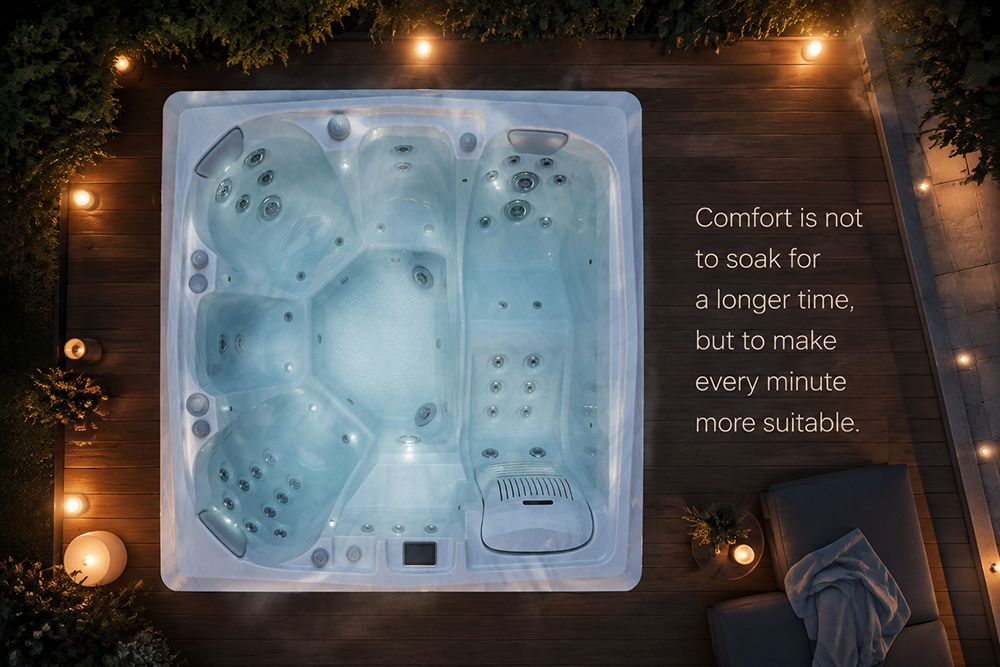
Yes. Supportive seating, well-aligned jets, stable water temperature, and clean water can make a shorter session feel more comfortable without encouraging you to stay in longer.
Bellagio model pages describe ergonomic seating, adjustable jet arrangements, circulation, filtration, and sanitation options on specified models. Features vary, so compare the exact configuration and wet-test the seats and controls before ordering.
What Routine Makes Hot-Tub Time Easier to Manage?
A simple before, during, and after routine makes session length easier to control. Decide on a conservative time before entering, keep a clock visible, and avoid alcohol before and during use.
Shower first, check water temperature and chemistry, enter gradually, use moderate jets, and keep drinking water nearby. Afterward, step out carefully, cool down, hydrate, replace the cover, and complete any required water-care checks.
Frequently Asked Questions
Is 30 minutes too long in a hot tub?
It can be too long for some people, especially near 104°F (40°C). Use a shorter starting period and leave earlier whenever body signals change.
Can I stay longer if the water is cooler?
Lower water temperature may feel easier to tolerate, but it does not create a universal safe duration. Continue to monitor how you feel and follow individual medical guidance.
Should I use a timer?
A visible timer is useful because relaxation can make time easy to lose. Treat it as a reminder to reassess, not permission to stay until it rings.
Can I drink alcohol in a hot tub?
No. CDC guidance says not to drink alcohol before or during hot-tub use because it can increase safety risks.
What Is the Right Hot-Tub Session for You?
Choose a conservative starting time, keep the temperature within public-health guidance, and let your body end the session early. When choosing a hot tub, compare the exact Bellagio model for seat fit, jet control, circulation, filtration, sanitation, and everyday maintenance.
Educational information only; it does not replace individual medical advice. Product features and availability vary by model and market.
What Is the Right Hot-Tub Session for You?
Use temperature, body signals, and personal health factors to plan a shorter, more comfortable hot-tub session.
Compare Bellagio Models