Can You Use a Hot Tub in the Rain?
Learn when light rain may be manageable, when to get out immediately, and how to prepare and inspect your spa around severe weather.
Quick Answer
Light rain alone does not always rule out a hot-tub session, but thunder, lightning, severe wind, flooding, electrical damage, or an official warning does. Leave the water at the first thunder or flash, enter a substantial enclosed building or hard-topped vehicle, and wait at least 30 minutes after the last thunder before returning outdoors. Inspect the spa before restarting it.
Light Rain
Check the forecast, drainage, and wet walking surfaces.
Thunder
Leave immediately and wait 30 minutes after the last thunder.
Wind and Flooding
Stop use, secure approved components, and move indoors.
Snow and Heat
Protect access, circulation, cover condition, and water care.
When Is Light Rain Compatible With Hot-Tub Use?
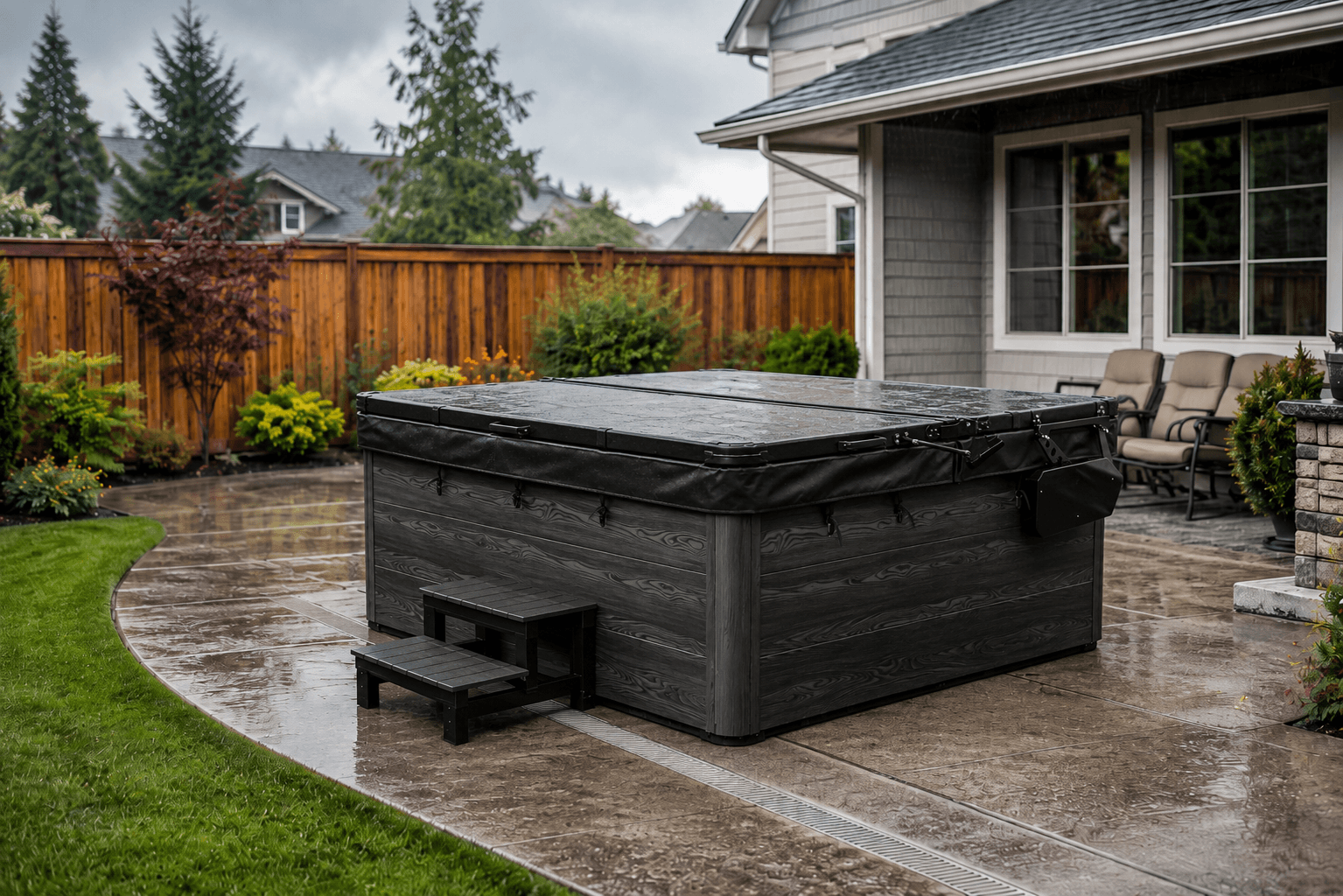
Light rain may be manageable only when the forecast and surroundings show no lightning, damaging wind, flooding, electrical concern, or local severe-weather warning. Wet surfaces still increase slip risk, so keep the route to the spa clear, well lit, and free of standing water.
Close and secure the cover whenever the spa is not in use. A cover can reduce direct debris and rain entry, but it does not make hazardous weather safe or replace correct drainage and electrical installation.
| Weather Condition | Use Decision | Immediate Action |
|---|---|---|
| Light rain, no hazards | May be manageable | Recheck forecast, drainage, walking surface, and equipment condition |
| Thunder or lightning | Stop immediately | Move to safe shelter; wait at least 30 minutes after last thunder |
| Severe wind or official warning | Do not use | Close and secure approved components; store loose objects |
| Floodwater or electrical damage | Do not touch or restart | Keep clear and contact qualified professionals |
| Snow, freeze, heat, dust, or smoke | Follow model and climate procedure | Inspect cover, access, circulation, filter, water level, and chemistry |
Why Should You Leave at the First Thunder or Lightning?
Thunder means lightning is close enough to create danger, so get out of the water immediately and move indoors. The National Weather Service says no place outside is safe during a thunderstorm and recommends waiting at least 30 minutes after the last thunder before resuming outdoor activity.
A covered patio, gazebo, open garage, or small rain shelter is not a safe lightning refuge. Use a substantial enclosed building or an enclosed hard-topped metal vehicle with the windows closed.
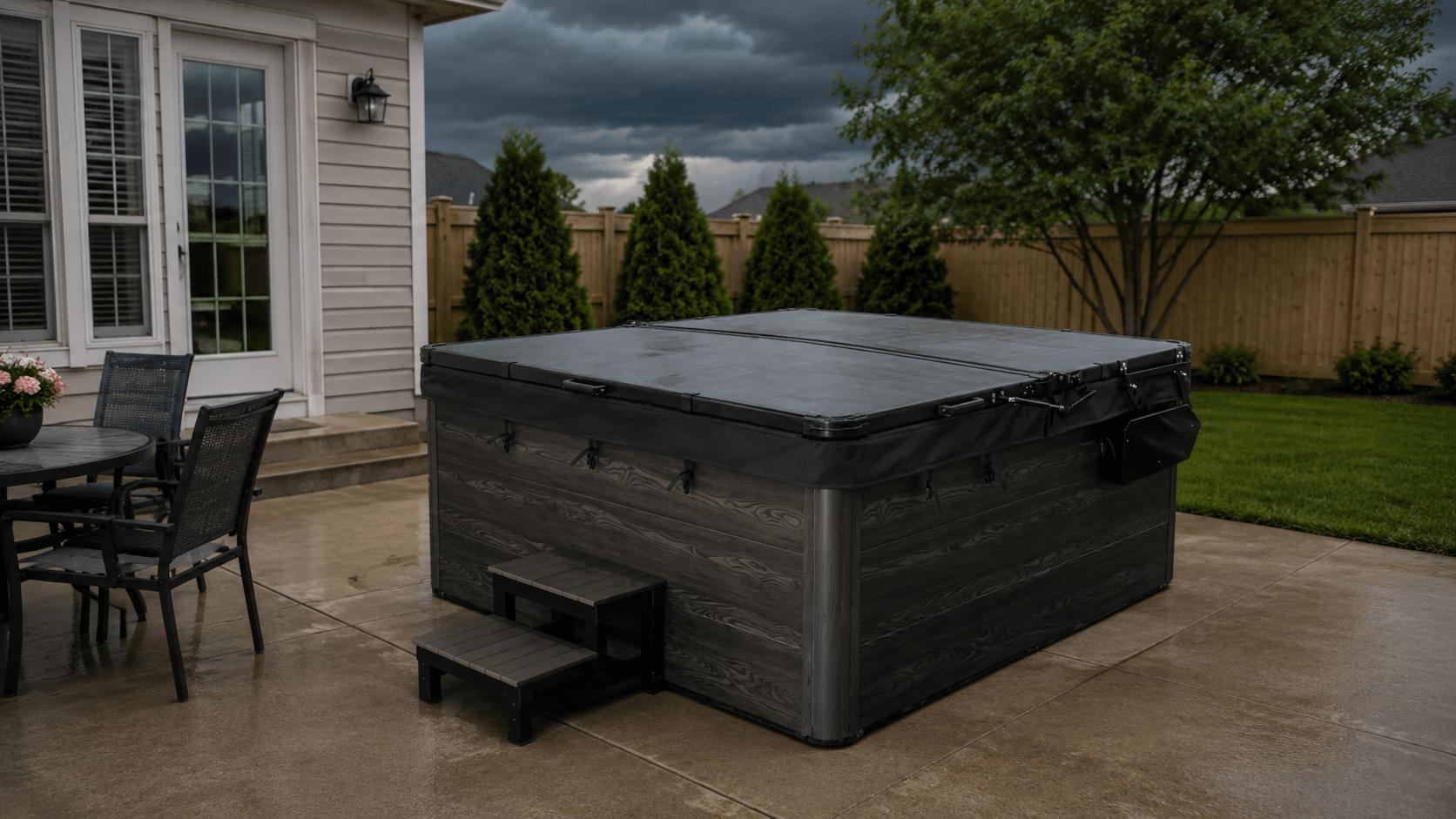
What Should You Do Before High Winds or a Severe Storm?
Before severe wind arrives, stop using the spa, close the cover correctly, secure it with the manufacturer-approved fastening system, and remove loose objects that could become airborne. Store umbrellas, light furniture, planters, toys, and accessories in a protected place.
Do not improvise by stacking bricks, furniture, or other heavy objects on the cover. They can damage the cover or shell and may still shift in strong wind. Follow the exact cover and storm instructions for the installed model, and contact a qualified service professional when damage is suspected.
How Should You Protect a Hot Tub During Snow and Freezing Weather?
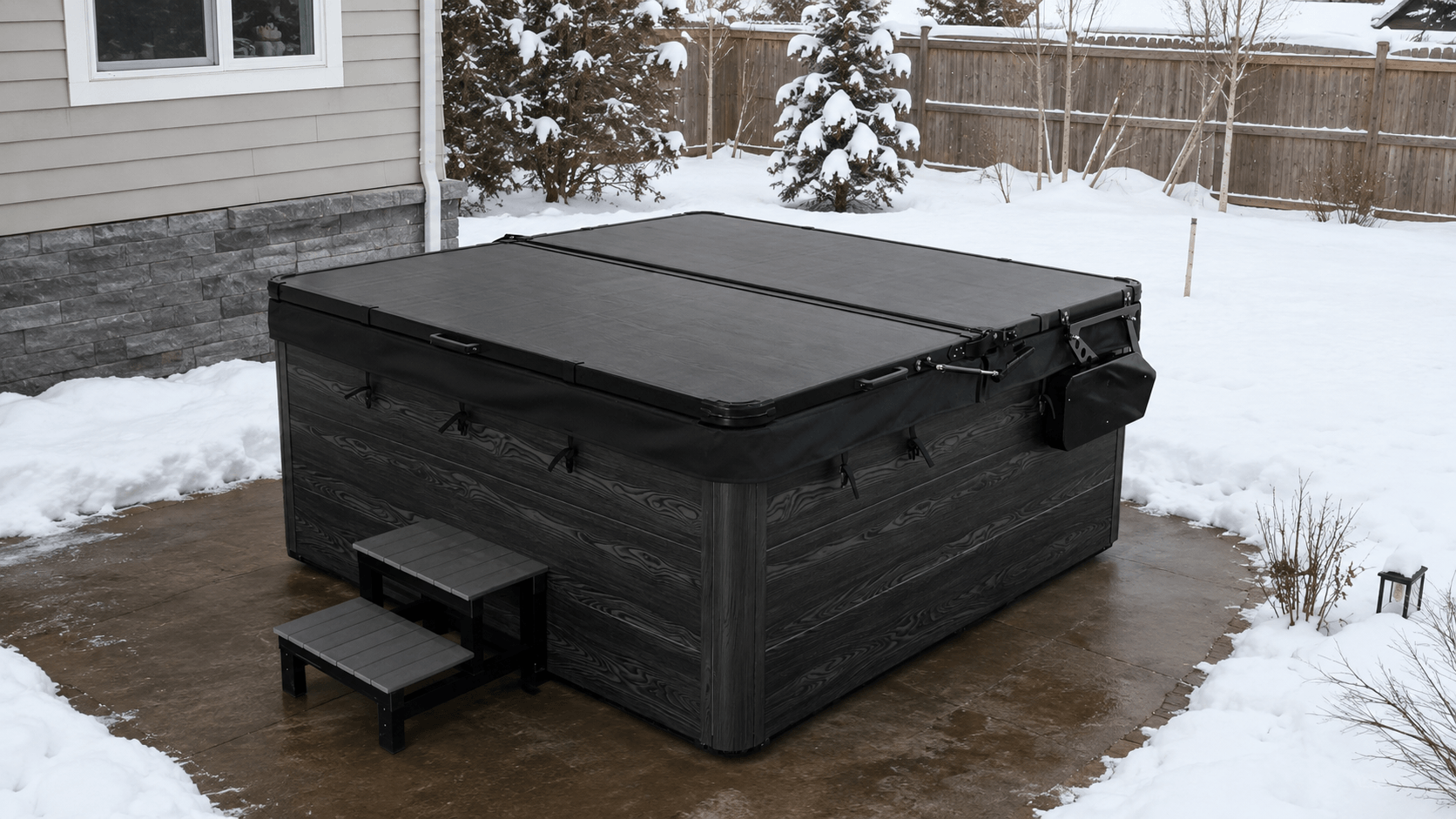
Keep access, drainage, vents, and the cover area clear while following the model manual and local winter-safety guidance. Remove snow carefully before it becomes a heavy or uneven load, and never use sharp tools that could puncture the cover.
If the spa remains in service, maintain its normal circulation and freeze-protection operation as specified for the model. If it will be shut down, use the manufacturer-approved winterization procedure. Simply switching off a water-filled spa can expose plumbing and equipment to freeze damage.
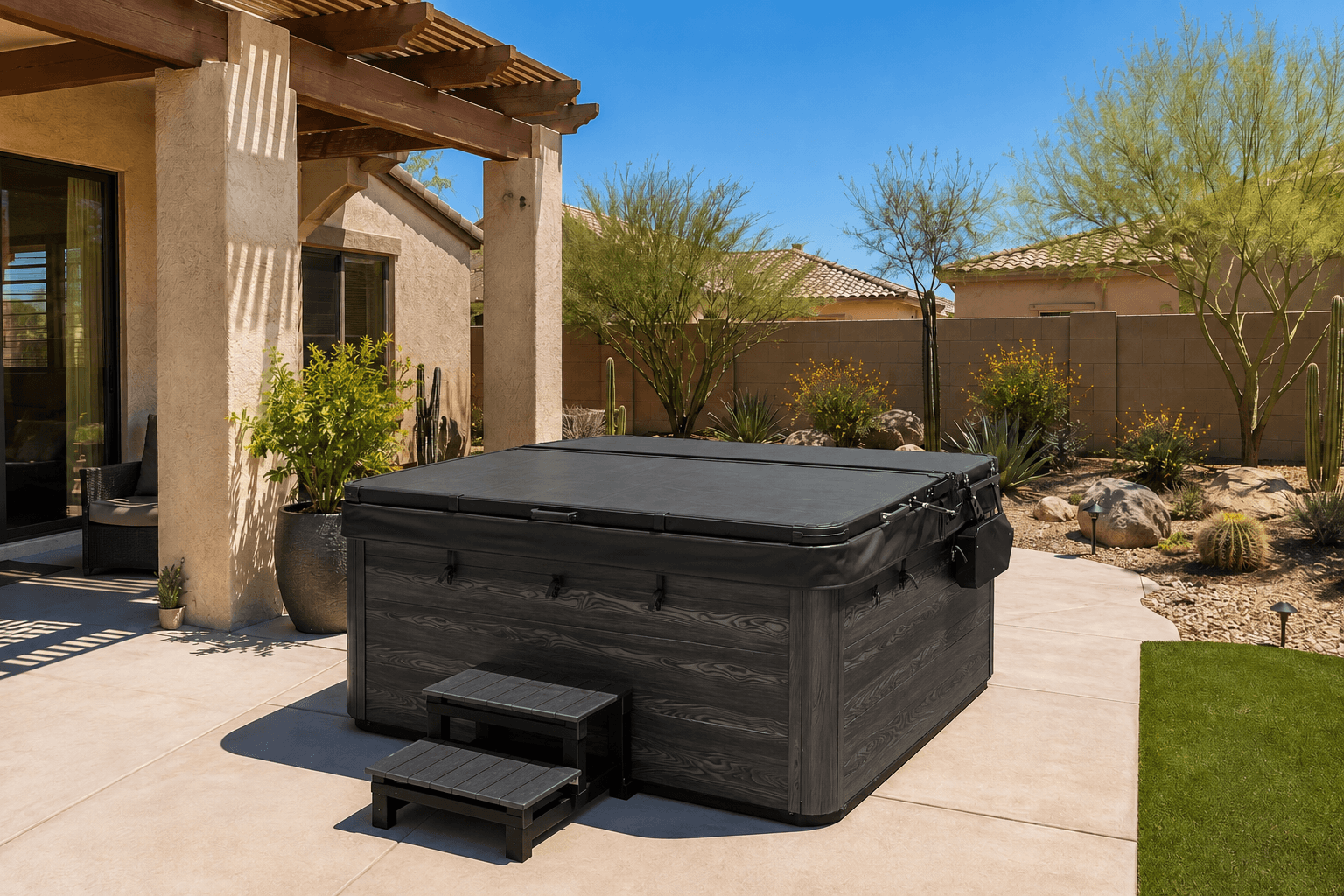
How Do Heat, Sun, Dust, and Smoke Affect Hot-Tub Care?
Hot, sunny, dusty, or smoky weather calls for closer attention to the cover, water level, filters, and water chemistry. Sunlight, evaporation, windblown dirt, and frequent cover opening can change maintenance needs even when the spa is not being used.
Keep the cover closed when appropriate, inspect it for heat or weather damage, and test water before use. Do not place a temporary shade structure where wind could turn it into a hazard or where it blocks required equipment access and ventilation.
What Should You Inspect After Bad Weather?
After severe weather, inspect the area before opening or restarting the spa. Begin with the approach path and drainage, then check the cover, cabinet, visible wiring and controls, water surface, and normal circulation and heating behavior.
Do not enter if floodwater reached the spa, standing water surrounds electrical equipment, a cover is displaced or damaged, wiring is exposed, the shell or cabinet is damaged, water is unusually dirty, or equipment behaves abnormally. Keep power decisions and repairs for a qualified professional and the applicable manual.
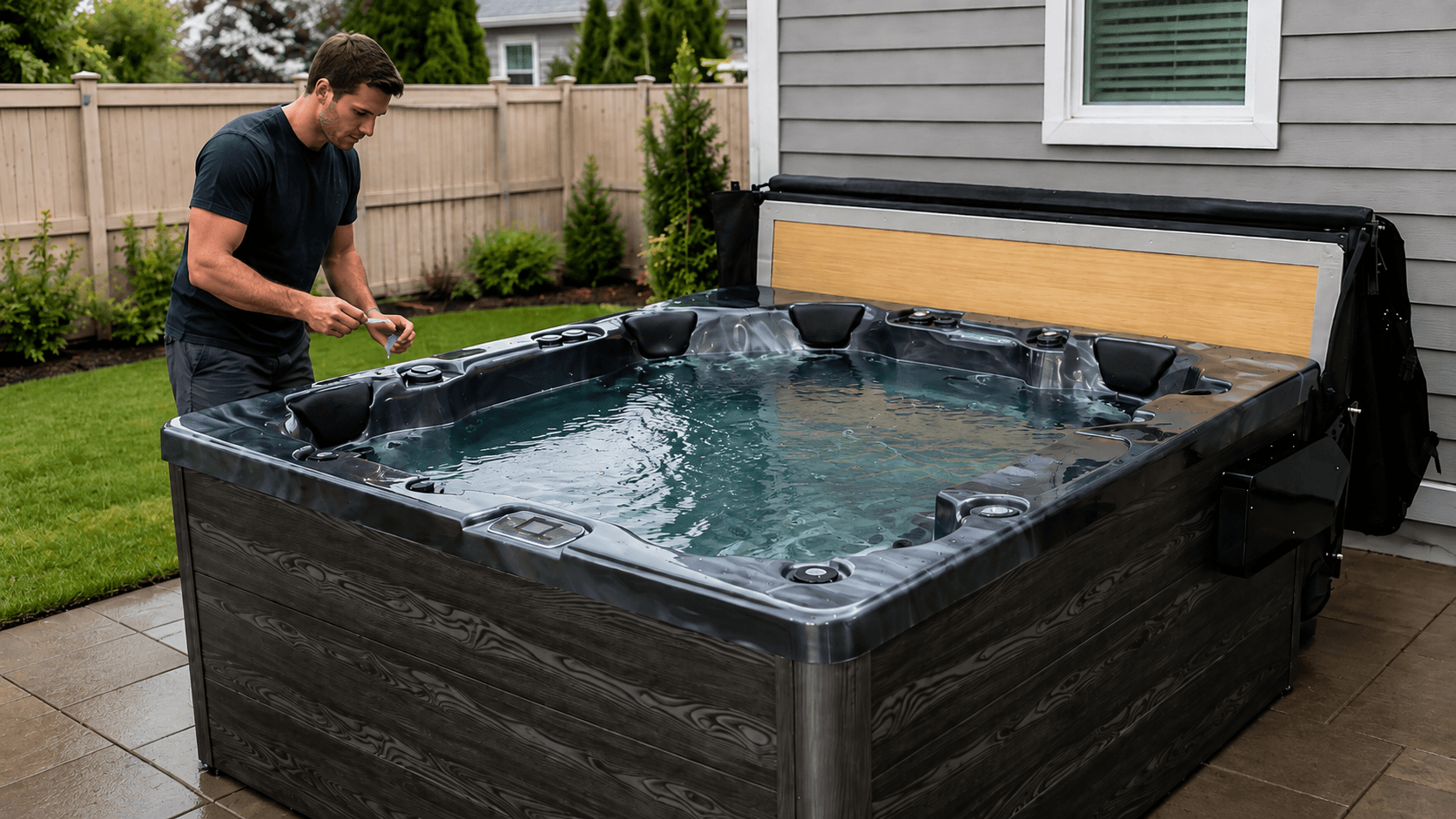
When Should You Retest and Correct the Water?
Retest the water whenever rain, debris, dust, smoke residue, or unusual runoff may have entered the spa, and always before people return after a significant weather event. Adjust only from actual test results and product instructions.
CDC guidance recommends routine hot-tub testing and identifies pH 7.0 to 7.8, at least 3 ppm chlorine, or 4 to 8 ppm bromine as its user guidance. If floodwater or substantial contamination entered the spa, keep it closed and follow professional and manufacturer remediation instructions rather than relying on a quick chemical adjustment.
Which Ownership Features Matter in Variable Weather?
A secure model-matched cover, suitable insulation, dependable circulation and filtration, accessible water-care components, correct drainage, and service access all matter in variable weather. The best combination depends on climate, installation, and how the spa will be used year-round.
Bellagio model pages may list HeatArmor 3D covers, circulation-based filtration, ozone sanitation, or climate-related insulation options. Availability varies by model and market, so compare the exact quoted configuration and installation requirements before ordering.
Frequently Asked Questions
Can you use a hot tub in light rain?
Possibly, when there is no thunder, lightning, high wind, flooding, electrical concern, or official warning. Recheck the forecast and wet walking surfaces before entering.
How long should you wait after thunder?
Wait at least 30 minutes after the last thunder before returning outdoors, following National Weather Service guidance.
Is a gazebo safe during lightning?
No. Open-sided shelters, gazebos, porches, and similar structures are not safe lightning shelters. Move to a substantial enclosed building or enclosed hard-topped vehicle.
Should you turn off a hot tub during a winter storm?
Do not improvise. A water-filled spa may need circulation and freeze protection. Follow the exact model manual or a qualified service professional for operating, shutdown, or winterization decisions.
Should you test hot-tub water after heavy rain?
Yes, if rain, runoff, or debris may have entered, test before use and adjust from the measured result. Significant contamination may require professional remediation.
How Can You Build a Weather-Ready Hot-Tub Routine?
Check the forecast before every session, define a safe shelter in advance, and treat thunder, flooding, severe wind, and electrical damage as stop-use conditions. For ownership, compare the exact Bellagio model for its cover, insulation, circulation, filtration, sanitation, installation, and service requirements.
Follow local warnings, electrical codes, the installed model manual, and qualified professional advice. Product features and availability vary by model and market.
How Can You Build a Weather-Ready Hot-Tub Routine?
Learn when light rain may be manageable, when to get out immediately, and how to prepare and inspect your spa around severe weather.
Compare Bellagio Models