Quick Answer
A hot tub can be a useful part of a relaxation routine. Warm-water immersion may help you feel calmer, ease temporary muscle tension, and support a pre-sleep wind-down. Evidence for lasting cardiovascular or medical benefits is less certain. A hot tub is not a treatment, and safe temperature, water care, hydration, and individual health conditions all matter.
Relaxation
Warmth and a quiet setting may make it easier to shift into a calmer state.
Sleep Routine
Warm-water bathing one to two hours before bed may support a wind-down routine.
Short-Term Comfort
Buoyancy, warmth, and supportive seating may temporarily ease a sense of tension.
Evidence Limits
A hot tub is not a treatment and does not replace medical care, exercise, or rehabilitation.
What Health Benefits Can Warm-Water Immersion Realistically Support?
The most realistic benefits are short-term comfort, relaxation, and support for a repeatable wellness routine. Warm water changes how the body feels in the moment, while buoyancy can make supported positions feel easier.
That is different from proving that hot tubs prevent disease or treat pain, sleep disorders, anxiety, or cardiovascular conditions. Product features can shape comfort, but they do not guarantee a health result.
| Wellness Goal | What Warmth May Support | Evidence Boundary | Practical Use |
|---|---|---|---|
| Wind down | A calmer pre-sleep routine | Bathing evidence is not hot-tub-specific | Try one to two hours before bed |
| Temporary comfort | A relaxed feeling in tired areas | Not injury treatment or rehabilitation | Use gentle settings and supportive posture |
| Relaxation | Time away from distractions | Does not treat anxiety | Keep the routine quiet and repeatable |
| Circulatory response | Short-term changes during immersion | Long-term benefit remains uncertain | Ask a clinician if cardiovascular risk applies |
Can a Hot Tub Help You Wind Down Before Sleep?
It may help some people transition into bedtime, especially when the soak becomes part of a quiet, consistent routine. A 2019 systematic review of warm baths and showers found that passive body heating one to two hours before bed, for as little as 10 minutes, was associated with faster sleep onset and better sleep efficiency or self-rated sleep quality.
The review was not specific to hot tubs, and the studies were limited and varied. Treat the timing as a practical experiment, not a promise: finish early enough to cool down, keep the experience comfortable, and notice how your own sleep responds.
What Happens to Circulation in Warm Water?
Warm-water immersion can create immediate cardiovascular changes, including a faster heart rate and lower readings for some blood-pressure measures. These are acute responses, not proof of lasting heart-health benefits.
Recent reviews describe the evidence for broader cardiovascular improvement as inconclusive. Anyone with heart disease, blood-pressure concerns, fainting episodes, or medicines that affect circulation should ask a healthcare professional what is appropriate.
Can Warm Water Help After Sitting or Physical Activity?
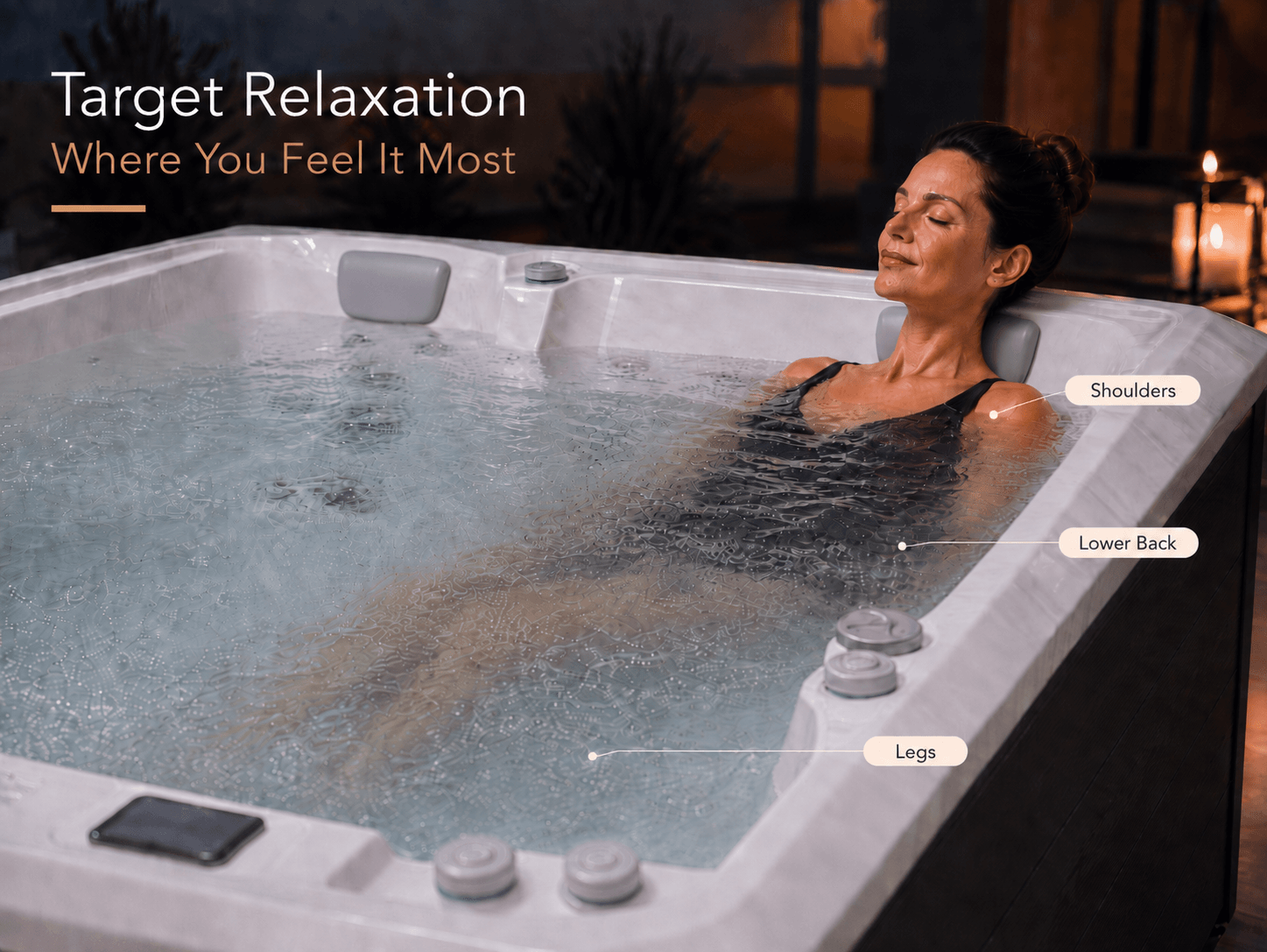
Warmth and buoyancy may make stiff or tired areas feel more comfortable for a while. A well-supported seat and appropriately aligned jets can also make it easier to relax the shoulders, lower back, or legs without forcing a position.
Use gentle settings first and stop if you feel pain, numbness, dizziness, or unusual discomfort. Persistent or worsening symptoms need professional assessment rather than longer or hotter soaking.
Does Hot Tub Time Help You Relax?
Yes, the combination of warmth, reduced distraction, and a familiar routine can make relaxation easier. The benefit may come as much from the setting and habit as from any single feature.
Keep claims personal and observable: feeling calmer after a soak is reasonable; claiming that a hot tub treats anxiety or lowers stress hormones is not supported well enough for a buying decision.
What Does a Hot Tub Not Replace?
A hot tub does not replace medical care, prescribed treatment, regular physical activity, sleep evaluation, or rehabilitation. It should not be used to push through an injury or mask symptoms that need diagnosis.
If your main goal is managing a health condition, discuss it with a qualified clinician first. Then evaluate a hot tub as a comfort and lifestyle product, with features chosen for fit, upkeep, and safe use.
How Can You Use a Hot Tub More Safely?
Keep the water at or below 104°F (40°C), avoid alcohol before and during use, and do not allow children under five into a hot tub. Shower before entering, do not swallow the water, and stay out if you have diarrhea.
Maintain disinfectant and pH according to public-health guidance and the manufacturer’s instructions. The CDC recommends at least 3 ppm chlorine or 4–8 ppm bromine, with pH between 7.0 and 7.8. Leave immediately if you feel dizzy, faint, overheated, or unwell.
Who Should Ask a Healthcare Professional Before Using One?
Pregnant people should consult a healthcare professional before hot-tub use. The same precaution is sensible for people with cardiovascular disease, unstable blood pressure, fainting risk, open wounds, active infection, impaired heat sensation, or medicines that may affect temperature control or alertness.
Individual advice matters more than a generic time limit. A clinician who knows your history can help you decide whether hot-water immersion is appropriate and what limits to use.
Frequently Asked Questions
How long should a hot-tub session last?
There is no universal duration for every person. Start conservatively, keep the water at or below 104°F (40°C), and leave if you feel overheated, dizzy, faint, or unwell. Follow medical advice when a health condition or medication changes your heat tolerance.
Is a hot tub good for sleep?
It may support a wind-down routine. Research on warm baths and showers suggests potential benefit when used one to two hours before bed, but the evidence is not specific to hot tubs and does not guarantee better sleep.
Can a hot tub improve circulation?
Warm-water immersion can change circulation and heart rate during or shortly after a session. Evidence for lasting cardiovascular improvement remains uncertain, so this should not be treated as heart therapy.
What should I compare when choosing a hot tub?
Compare the exact model’s seat depth, angles, jet positions, controls, circulation, filtration, sanitation options, and maintenance needs. A wet test is the best way to check whether the seats and jets fit the intended users.
Is a Hot Tub a Good Fit for Your Wellness Routine?
A hot tub may fit if your goal is relaxation, short-term comfort, and a repeatable pause in your day. Compare the exact model’s seat depth, angles, jet positions, circulation, filtration, sanitation options, and maintenance needs. Bellagio configurations vary by model, so a wet test is the clearest way to confirm fit.
Health information is educational and not a substitute for individual medical advice. Product features and availability vary by model and market.
Is a Hot Tub a Good Fit for Your Wellness Routine?
Learn what warm-water immersion may support, where the evidence has limits, and how to use a hot tub more safely.
Compare Bellagio Models