How Should You Prepare for a Hot Tub Installation?
We explain the site, safety clearances, delivery, electrical work and first startup preparations for our spas.
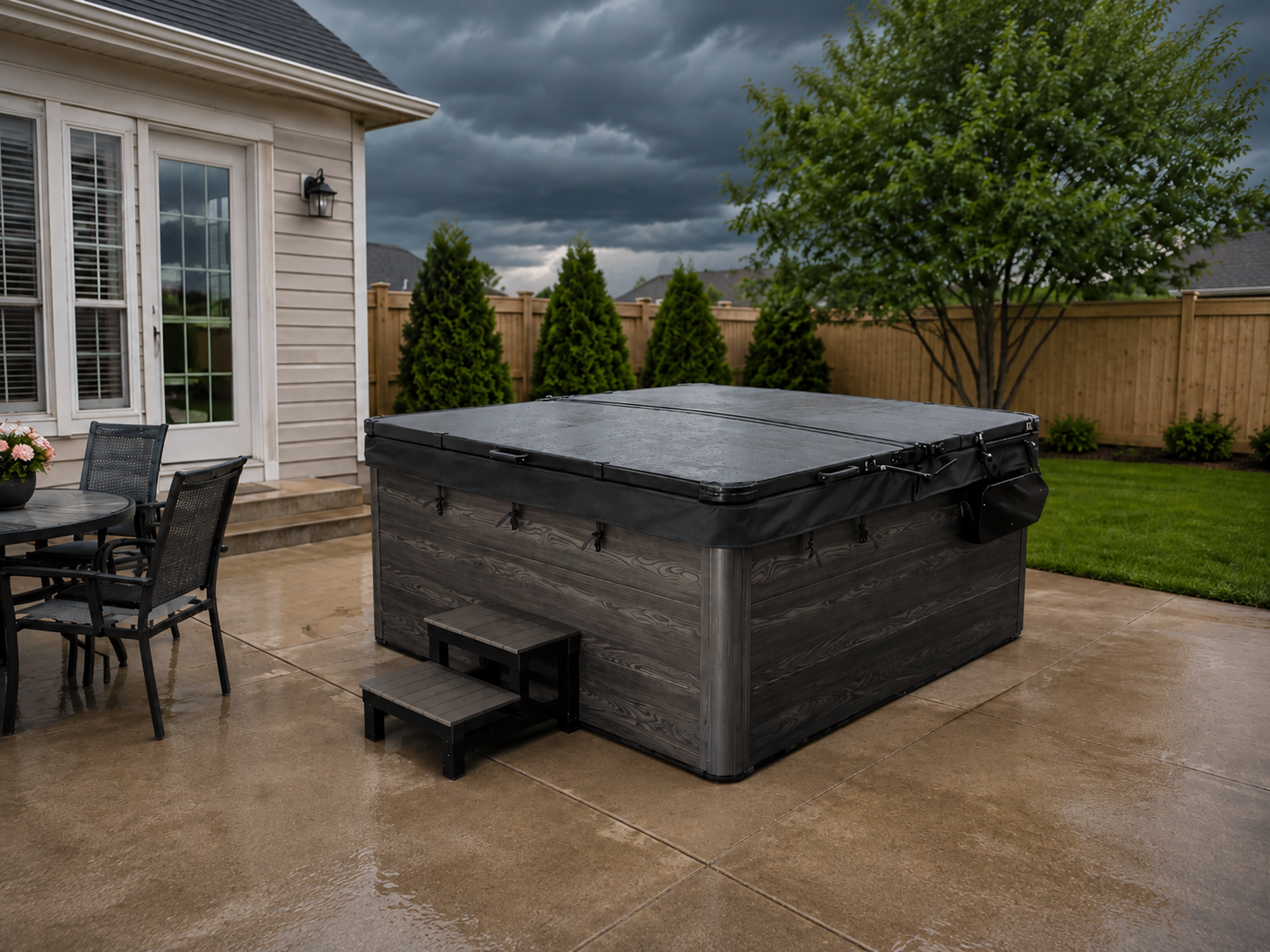
Before your spa arrives, prepare a stable base for its filled and occupied weight, check the delivery route, and arrange professional electrical installation. Plan the required distances from metal surfaces, external appliances and overhead power lines, plus access on all sides for service. We recommend agreeing the drainage, cover security and first-startup checks with your Bellagio dealer before delivery.
How Should You Prepare the Site and Base?
Choose a level, stable base that can support your spa when filled and occupied. We recommend having the ground or supporting structure assessed before you book delivery, with the water and users included in the load calculation.
Ask your contractor to specify the foundation dimensions, thickness, reinforcement and drainage for your site. Plan the base extending beyond the spa separately from the working space around it. If you are considering a raised deck, have a structural professional confirm its capacity and any reinforcement needed before installation.
Choose a location with convenient access from the house, space for entry steps and a clean walking route. A doormat can help keep soil and grass out of the water. Check permits, inspections and any local barrier requirements before construction starts.

Which Safety Clearances Should You Plan Before Installation?
Plan the safety clearances, electrical protection and controlled access before choosing the final position. We recommend using the following distances as part of your site plan and having your electrician confirm the requirements for your installation and local rules.
| What to check | Planning distance | Required action |
|---|---|---|
| Metal surfaces | At least 5 feet (approximately 1.5 meters) | Closer placement requires an electrician-approved bonding arrangement |
| External electrical appliances | At least 5 feet (approximately 1.5 meters) | Keep appliances away; do not operate them from the water |
| Overhead power lines | At least 10 feet (approximately 3 meters) | Electrician checks location and any greater local clearance |
Metal surfaces. Install the spa at least 5 feet (approximately 1.5 meters) from all metal surfaces, including nearby metal structures. If closer placement is needed, a licensed electrician must assess and complete the permitted bonding arrangement. The alternative described in our installation guidance requires each metal surface to be permanently bonded to the outside of the spa control box with a solid copper conductor no smaller than #8 AWG. The electrician must confirm the connection point and any stricter local requirements before approving the location.
External electrical appliances. Keep external lamps, radios, televisions, phones and similar electrical appliances at least 5 feet (approximately 1.5 meters) away from the spa. Never operate an electrical device while you are in the water. Include these appliances in your patio plan rather than placing them beside the spa after installation.
Overhead power lines. Do not place the spa within 10 feet (approximately 3 meters) of overhead power lines. Ask your electrician to check the proposed position and any greater clearance required locally. These spa-placement distances do not establish a clearance for crane work; your lifting contractor must assess that separately.
Children and cover security. Plan how you will prevent unsupervised access, including barriers or self-closing gates where required. Keep the cover secured and locked whenever the spa is not in use, and store the keys out of children’s reach. A locked cover does not replace responsible adult supervision around the spa.
Suction fittings. Check that suction fittings and filter baskets are present and intact before first use. Do not operate the spa if they are broken or missing. Have a qualified service professional select any replacement suction fitting or pump so the flow ratings remain compatible.
What Should You Measure Along the Delivery Route?
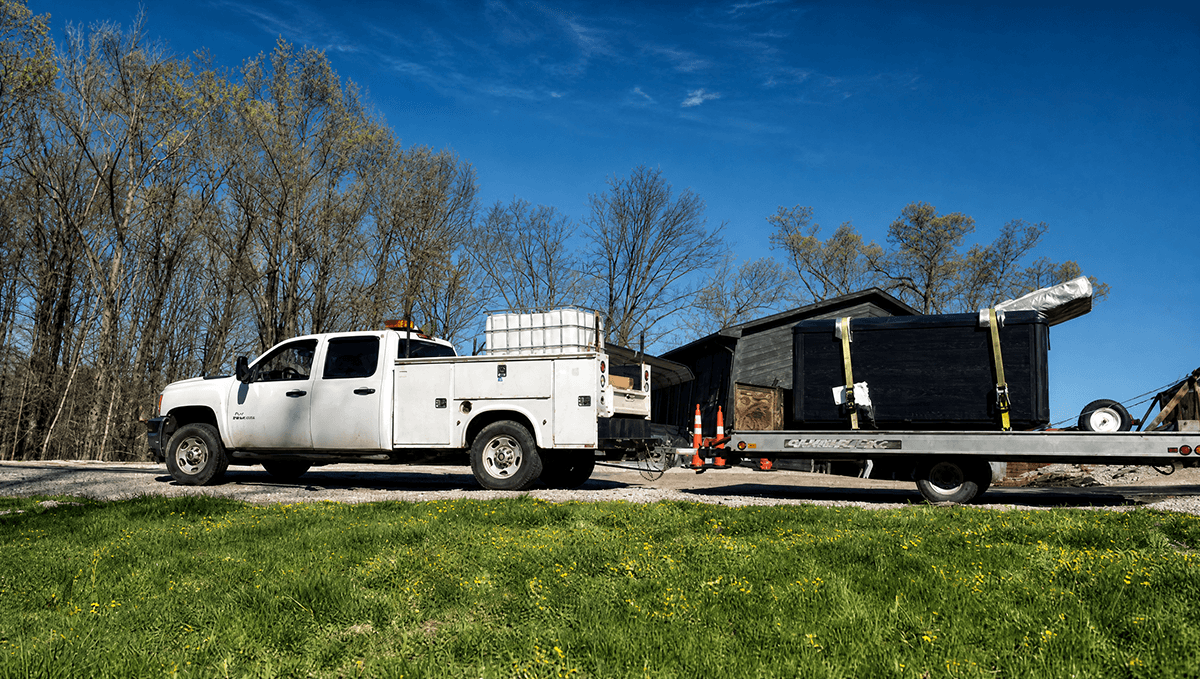
Measure the complete route from the delivery vehicle to the spa’s final position, including its narrowest and lowest points. Send the measurements and photographs to your Bellagio dealer so the delivery team can check the packaged dimensions and handling plan.
Record gates, corners, steps, slopes, branches, roof overhangs and fixed obstacles. Agree who will remove temporary obstructions and protect surfaces. If lifting equipment is needed, have a professional team assess access, ground conditions and nearby power lines before delivery day.
If your spa is equipped with a heat pump, confirm its transport orientation and the standing time required after delivery with the installation team. Keep the heat pump in its required position and complete any specified waiting period before powering it on or testing it.
What Access Should You Leave for Service and the Cover?
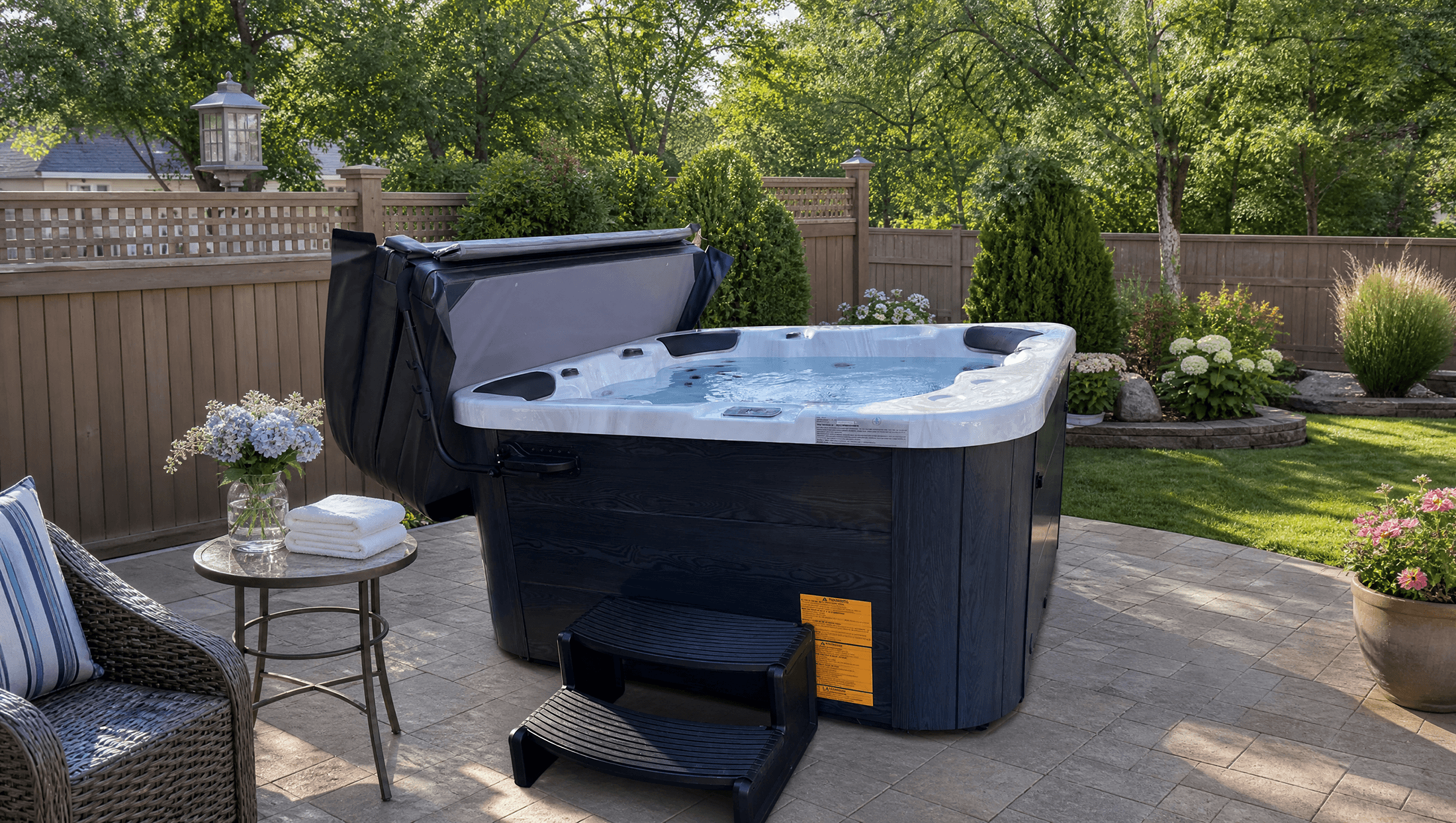
Keep all sides accessible so a technician can remove every side panel and reach the equipment. We recommend planning at least 1 meter (approximately 3.3 feet) of clear working space around the spa, then having your dealer confirm the space needed for the delivered unit and service tasks.
Make sure walls, fences, posts, fixed decking and landscaping do not permanently block a side. For a recessed installation, agree how each panel will be removed and how the technician will work before the deck is built.
Leave additional space for the cover and any cover lifter to move through their full travel. Place entry steps where they provide convenient access while allowing service panels to be removed.
What Should Your Electrician Confirm Before Installation?
Arrange electrical installation with a licensed electrician who has the delivered spa’s nameplate and installation instructions. Our spas must be connected for their supplied configuration, with the appropriate circuit, grounding, bonding and protective devices.
Have the electrician confirm the required ground-fault protection, such as a GFCI or the locally specified equivalent, and show you where to disconnect the power. Never remove or bypass that protection. Ask for a demonstration of the testing procedure and follow the protective device manufacturer’s test schedule.
For a cord-connected spa, use only the specified grounded receptacle and circuit. Do not bury the spa’s power cord. If the cord is damaged, stop using the spa and arrange replacement by a qualified professional before further use. For a hardwired installation, have the electrician provide the required dedicated circuit and disconnect arrangement.
The US Consumer Product Safety Commission recommends qualified pool and spa electrical inspection and appropriate ground-fault protection. Your electrician should apply the current requirements at your property. Read the CPSC electrical safety guidance.
How Should You Plan for Drainage?
Decide where water can legally and practically go before the hot tub is installed. You will need a route for periodic draining and a site layout that prevents unwanted water from collecting around the spa or your home.
Plan access to the drain connection and a suitable hose route. Keep discharge away from house foundations, basement entrances, and neighboring property. Ask your local wastewater or environmental authority which outlet or disposal method is permitted and what water-treatment conditions apply.
Drainage rules vary by location. For example, Portland restricts pool and hot-tub water entering its stormwater system and sets specific conditions for disposal. Do not assume a nearby street drain is an approved outlet. See Portland’s pool and hot-tub drainage guidance.
What Should You Check During First Startup?
Complete the equipment, filling and water-care checks with your installer before the first soak. We recommend a handover that shows you the normal operating condition, the basic controls and the checks you will perform during ownership.
With power off, have the installer inspect the equipment-area plumbing and unions. Connections should be secure without being overtightened, and gate valves must be open for operation. Remove filter packaging and prepare the filter as required for its assembly. Where cartridge pre-soaking is specified, soak it for at least 30 minutes; do not remove a filter while the spa is running.
For an assembly filled through the filter canister, place the hose there and keep the jets open during filling to reduce trapped air. Fill to the indicated water line or the level specified for your spa before power is applied. Have the installer complete the applicable filter fitting, priming and startup procedure, then check for leaks, circulation, jet operation and heating.
If the pump runs but no water moves, stop operation and have the installer resolve the cause. Before the installer leaves, learn the temperature controls, available heating and filtration settings, filter care, cover locks and power disconnect. Record any date, time or schedule settings used by your control system.
Test and adjust the water before bathing. Keep the water temperature at or below 104°F (40°C), enter and exit carefully, and avoid alcohol before or during use. Anyone who is pregnant, has a relevant medical condition or takes medication that may affect spa use should seek medical advice first. Leave the water if you feel dizzy or unusually drowsy. The CDC advises that children under 5 should not use hot tubs. Read the CDC hot-tub safety guidance.
Check the cover fit, straps, locks and keys during handover. Secure and lock the cover whenever the spa is not in use, and do not sit, stand or place objects on it. Keep your manuals, installation record and service contact where you can find them.
What Should Be Ready Before Delivery Day?
Confirm all six items below with the people responsible before you finalize the delivery appointment. A clear handover between you, your dealer, and local contractors helps prevent unfinished site work from holding up placement and startup.
| Item | Ready when | Coordinate with |
|---|---|---|
| Site and base | Model-specific load and support confirmed | Owner + structural/base professional |
| Site safety and local requirements | Electrical clearances, permits and access barriers checked | Owner + electrician + local authority |
| Delivery route | Measurements and handling plan accepted | Dealer + delivery team |
| Service and cover access | Every side panel removable; service space and full cover travel confirmed | Owner + dealer |
| Electrical preparation | Model documents reviewed; required work and inspection arranged | Qualified electrician |
| Drainage | Permitted outlet and hose route identified | Owner + local wastewater authority |
What Else Should You Know Before Installation?
A prepared base, an agreed delivery route, and coordinated electrical and drainage work make the installation easier to manage. Keep access and future care in the plan from the start, then use the instructions for your exact model to complete the handover.
Tell us which hot tub you are considering so we can help you identify the model information to discuss with your local dealer and installers.
Contact Us