Can Dogs Go in a Hot Tub? A Pet Safety Guide
Learn how to keep your dog out of spa water, plan a safer backyard, and respond when accidental entry raises concern.
Dogs should not go in a hot tub. Hot water can interfere with their ability to release body heat, while treated water, slippery surfaces, jets, and a difficult exit add avoidable risks. Let your dog relax nearby with shade and fresh drinking water, secure the spa area when it is unattended, and contact a veterinarian when accidental exposure causes symptoms or concern.
Why Should Dogs Stay Out of Hot Tubs?
Dogs should stay out because a hot tub is designed around human use, not canine heat regulation, drinking behavior, footing, or exit needs. A dog may follow you toward the warmest place in the yard because it wants to be close. Curiosity does not make the environment suitable.
Dogs release much of their excess body heat by panting and have limited sweating ability. Immersion in hot water adds heat while leaving fewer comfortable ways to move away and cool down. A calm-looking dog may also be frozen by uncertainty, so stillness does not prove comfort.
The water creates other concerns. Dogs may lap water, struggle on a wet shell, react to jets or bubbles, or have trouble finding a step. Fur, dirt, skin oils, and outdoor debris can enter a small recirculating system. Keeping the spa human-only protects the dog and keeps the owner''s water-care routine predictable.
What Are the Main Risks to a Dog?
The main concerns are overheating, drinking treated water, stress or difficult exit, and contamination or damage to the spa. The signs below can have many causes, so use them as reasons to act and seek advice, not as a home diagnosis.
Risks, Possible Signs, and Owner Actions
| Risk or Situation | What You Might Notice | What the Owner Should Do |
|---|---|---|
| Heat exposure | Rapid or unusual panting, drooling, distress, vomiting, weakness, poor coordination, collapse, or reduced responsiveness | Remove the dog from the heat and contact a veterinarian promptly. Severe signs require emergency veterinary care. |
| Drinking spa water | Repeated lapping followed by vomiting, lethargy, unsteadiness, or another behavior change | Stop access, offer fresh drinking water, and call a veterinarian when a substantial amount may have been swallowed or any symptom appears. |
| Concentrated water-care product exposure | Chewing a tablet, contacting granules or liquid concentrate, mouth discomfort, drooling, vomiting, or distress | Prevent further contact and call a veterinarian or ASPCA Animal Poison Control Center immediately. Do not induce vomiting unless a professional directs you. |
| Panic, fatigue, or difficult exit | Scrambling, freezing, slipping, repeated failed exits, coughing, or unusual breathing | Assist the dog out without putting yourself at risk, then seek veterinary advice for breathing trouble, possible aspiration, injury, or persistent concern. |
| Fur, dirt, or claw contact | Hair and debris in the water, a dirty filter, or visible surface damage | Keep the spa closed, inspect the filter and shell, test the water, and follow the model manual or dealer''s recovery guidance. |
Risk varies with the dog''s age, health, body shape, coat, stress level, and the circumstances of the incident. You do not need to calculate that risk before taking the simple preventive step: keep the dog out of the water.
Can Cooler Water or a Short Visit Make It Safe?
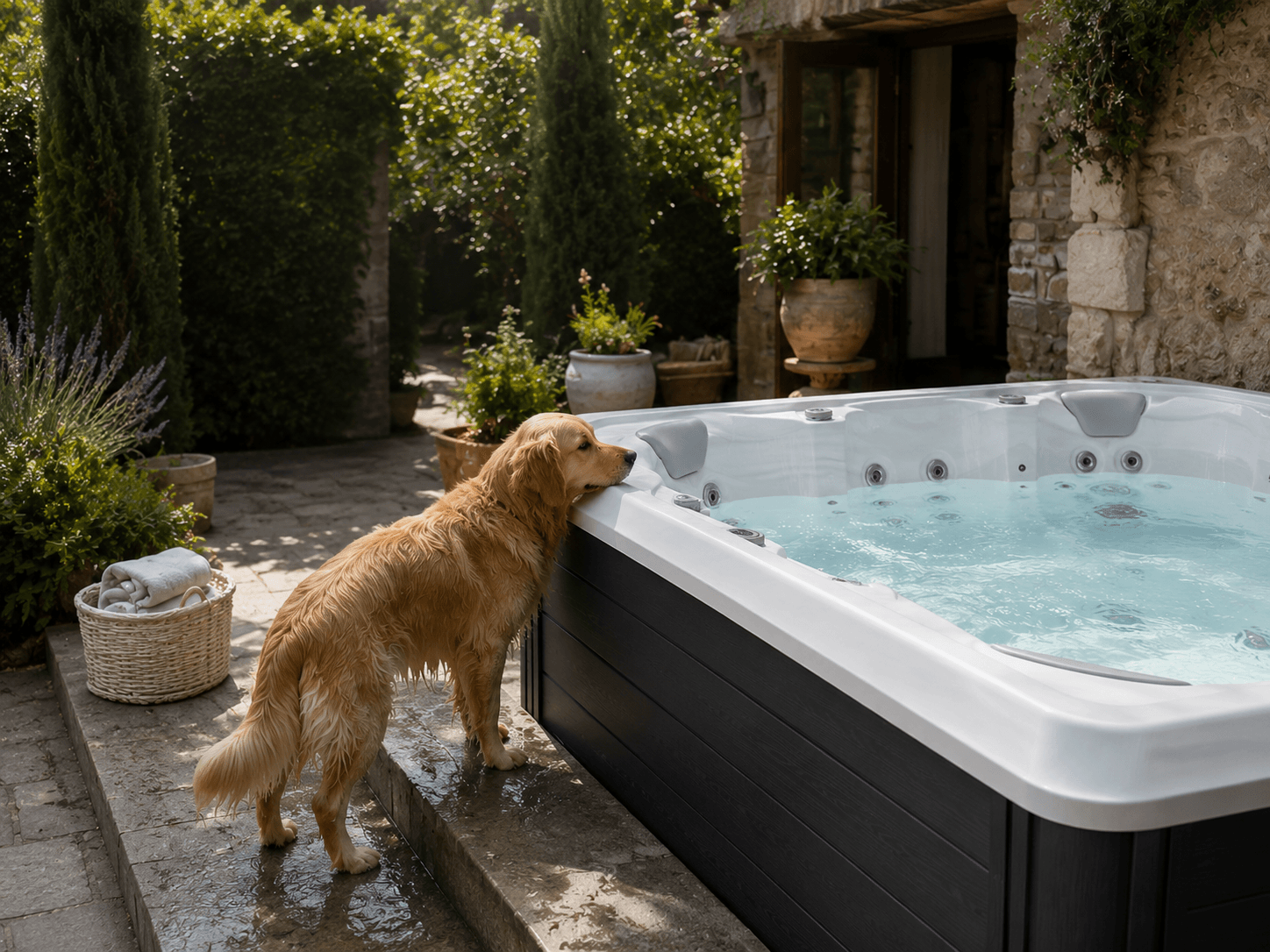
A lower setting or a very short visit does not create a recommended hot-tub practice for dogs. No single temperature or number of minutes accounts for health, size, coat, anxiety, water ingestion, footing, jets, or the ability to exit.
Turning the heater down also does not turn spa water into pet drinking or swimming water. The system still contains water-care products, circulation equipment, slippery surfaces, and openings designed for people. A short staged visit can teach a curious dog that climbing onto the steps or shell is allowed, which makes access harder to manage later.
If your dog enjoys water, provide a separate activity designed around the dog. Use fresh, comfortably cool water, make the exit obvious, keep the depth appropriate for the individual dog, and supervise the entire time. Empty and store the container after use so it does not become another unattended water hazard.
How Should You Plan a Pet-Aware Hot Tub Area?
Plan several layers of access control because a cover alone cannot replace a boundary and active supervision. Start before delivery if you are buying a spa, or walk the existing area from your dog''s point of view.
Pet-Aware Planning Checklist
- Choose a location visible from the house and the usual seating area.
- Discuss gates, fencing, latches, and local barrier rules with the dealer and qualified local professionals.
- Confirm the exact Bellagio model''s cover and securing method in the written order.
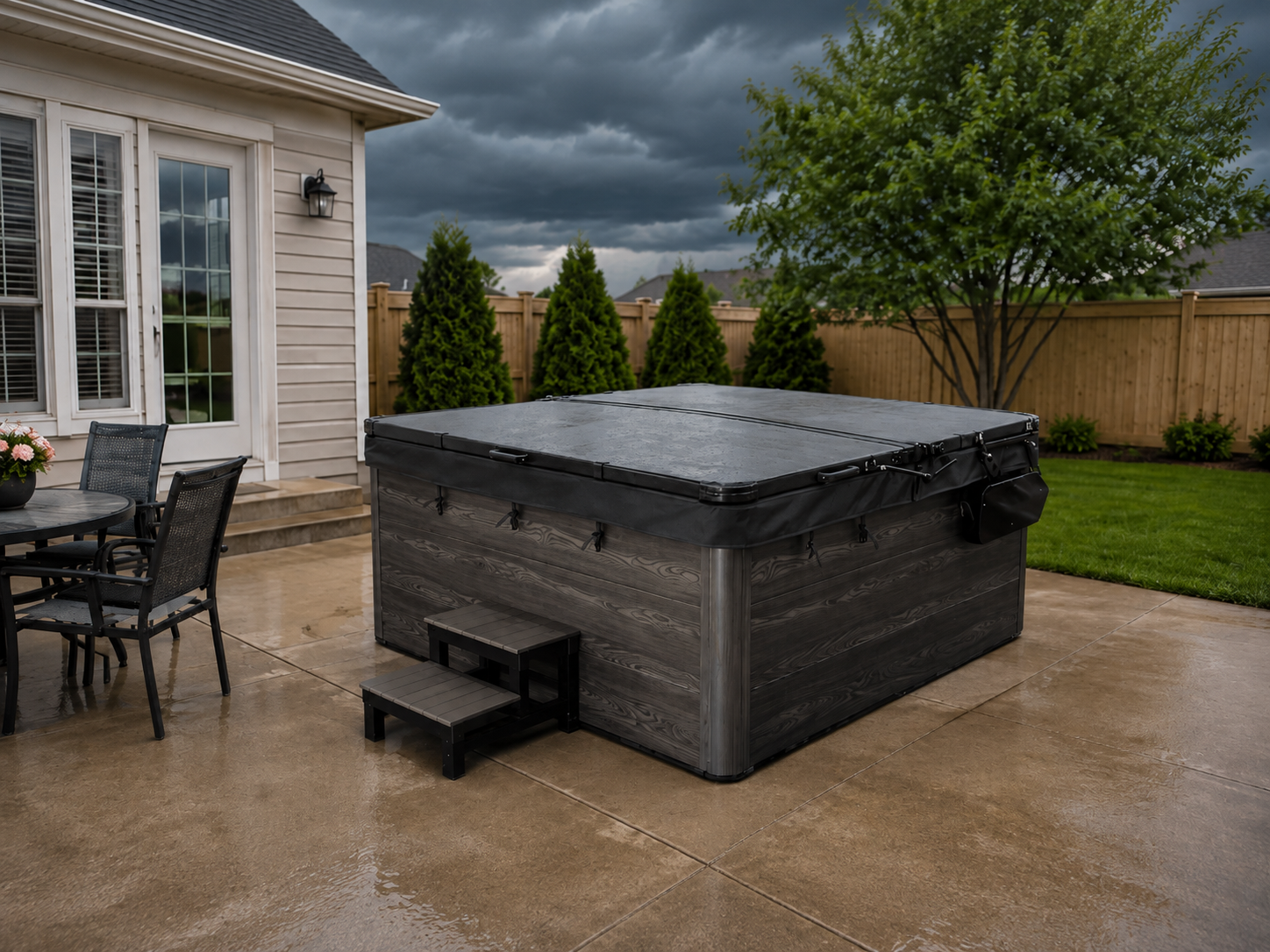
- Do not let a dog sit, stand, walk, or sleep on the cover; it is not a pet deck.
- Keep steps, cover lifters, furniture, and stored items from becoming an easy climbing route.
- Use a non-slip path and keep food scraps, treats, and scented trash away from the spa perimeter.
- Store chlorine, bromine, shock, test products, and other concentrates in closed original containers beyond the dog''s reach.
- Preserve the equipment access and ventilation required by the selected Bellagio model.
Watch how your dog behaves around the finished area before assuming the plan works. A tall barrier may stop one dog while a determined climber, jumper, or gate-opener needs another layer. Family members and guests should follow the same access rule.
Bellagio''s current Product Center, warranty-support route, and dealer network can help you identify the selected model and ask the right installation and service questions. The dealer should confirm the cover, access side, and maintenance needs for the configuration you order. These are planning inputs, not a pet-safety certification.
How Can Your Dog Stay Nearby Safely?
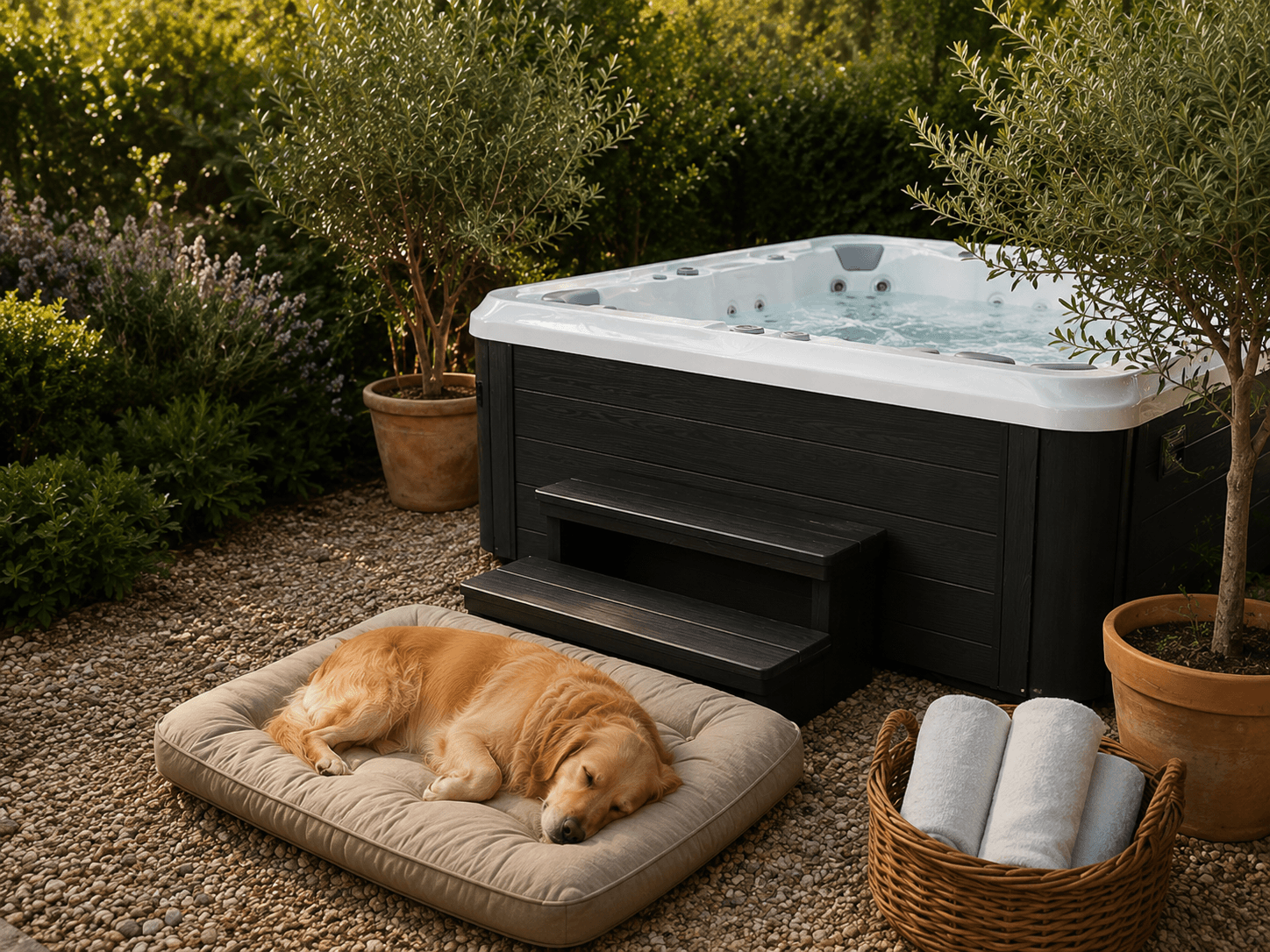
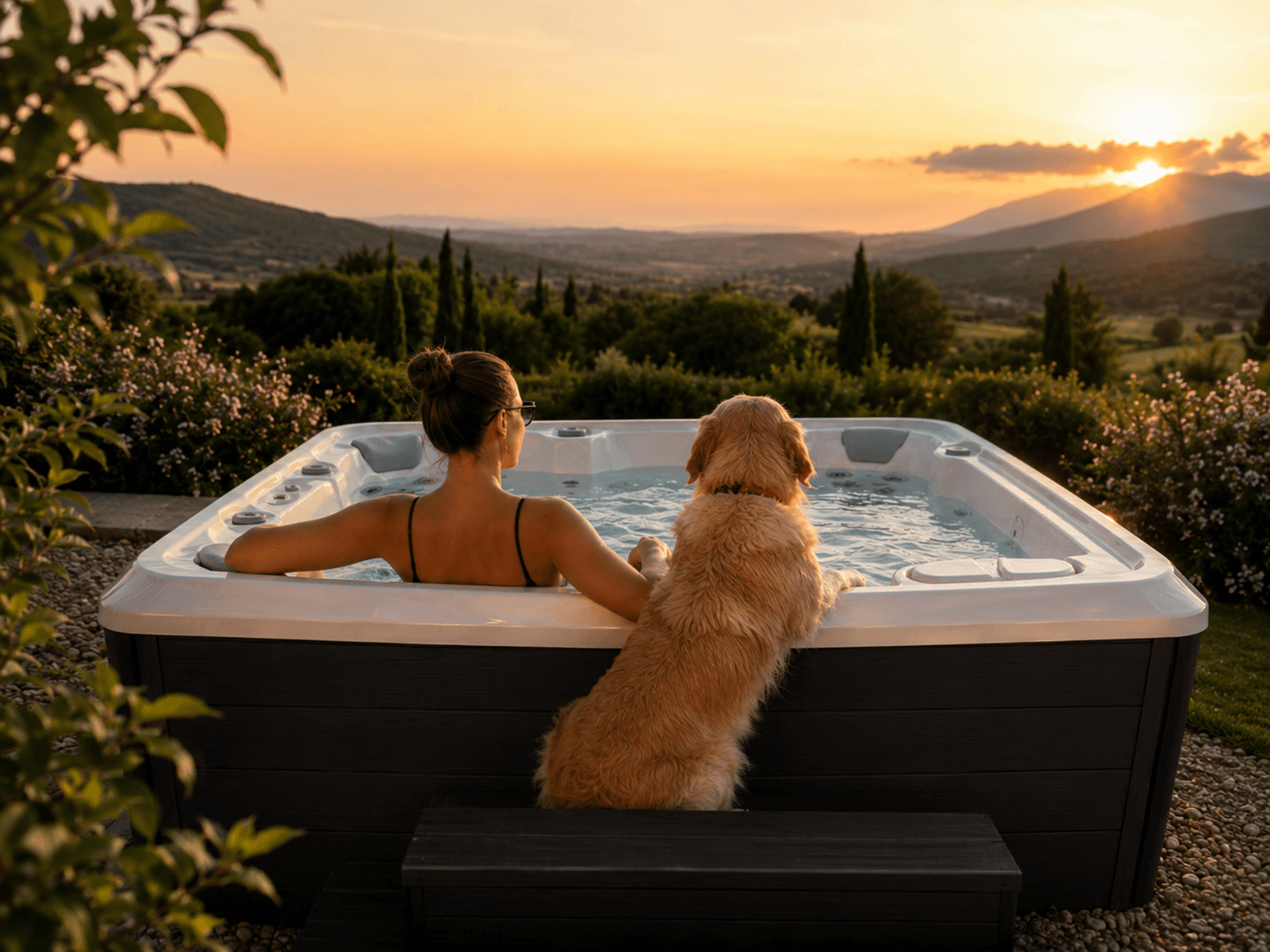
Give your dog a predictable place near the family and outside the spa-access zone. A washable bed, shade, fresh drinking water, and a familiar toy can make that spot more appealing than the steps or cover.
Place the water bowl far enough from the spa that splashes do not fill it. Reward the dog for settling in its place, and move the dog indoors or behind the barrier when you cannot supervise. During a gathering, assign one adult to know where the dog is instead of assuming every guest is watching.
Keep food off the spa edge and clean spills promptly. A dropped snack can draw a dog toward wet steps and open water. Store towels, toys, and chemical supplies so they do not become climbing aids or chew targets.
What Should You Do If Your Dog Enters the Hot Tub?
End the exposure, move the dog away from heat, and contact a veterinarian when symptoms or uncertainty exist. Keep your own footing secure while helping the dog out.
- Stop the jets if you can do so without delaying a safe exit, and assist the dog out of the water.
- Move the dog to a cool, quiet, well-ventilated place.
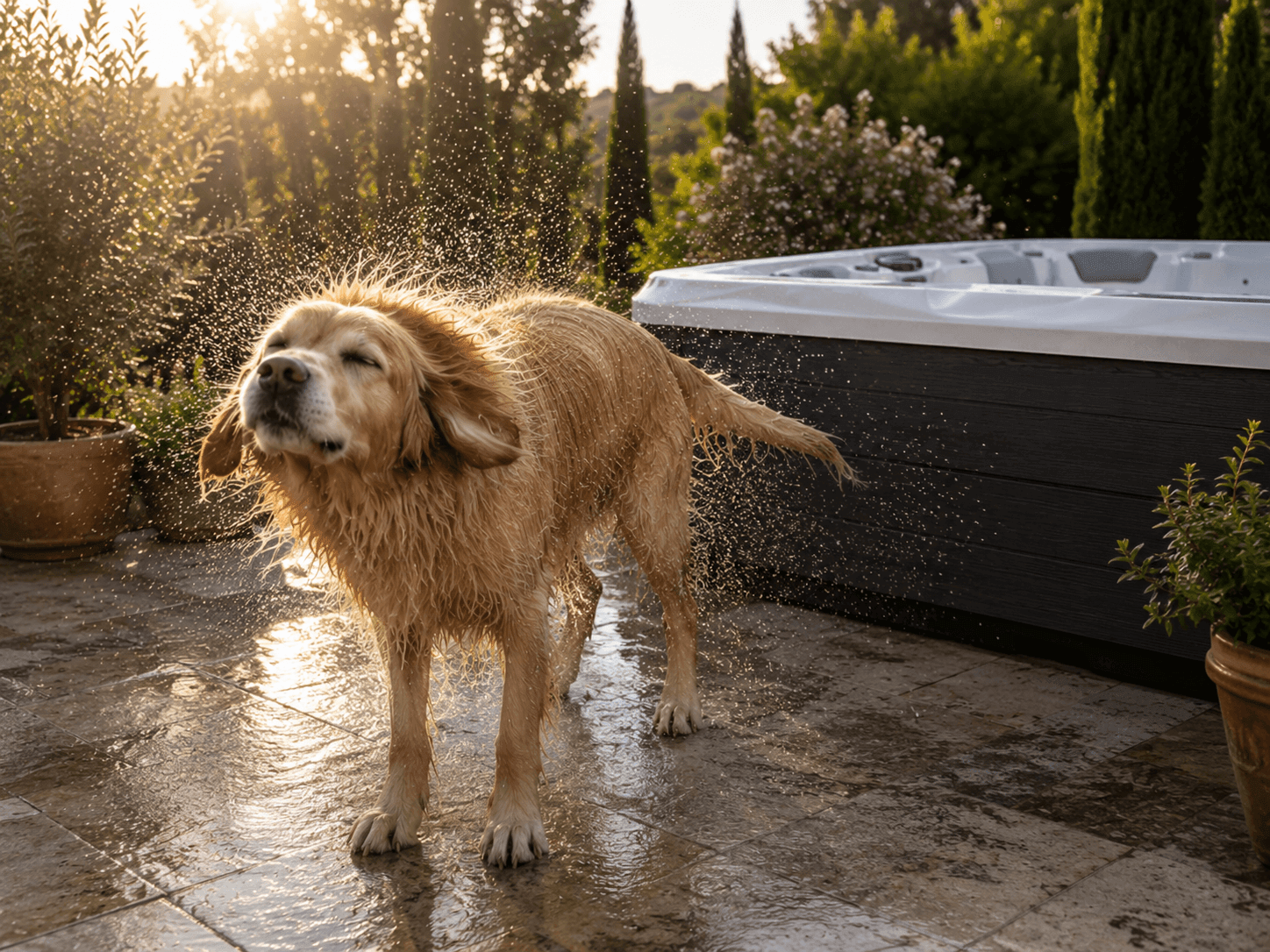
- Rinse treated water from the coat with fresh, comfortably cool water.
- Offer access to fresh drinking water without forcing the dog to drink.
- Observe breathing, coordination, alertness, vomiting, drooling, weakness, collapse, and any possible injury.
- Call a veterinarian promptly if signs appear, the dog may have swallowed a substantial amount, breathing seems abnormal, concentrated chemicals were involved, or you are unsure what to do.
Heatstroke is a veterinary emergency. Rapid panting, distress, vomiting, drooling, poor coordination, collapse, reduced responsiveness, breathing difficulty, or seizures require prompt veterinary guidance. Concentrated water-care products require immediate professional advice even when the dog looks normal. In the United States, the ASPCA Animal Poison Control Center can be reached at 888-426-4435; a consultation fee may apply.
How Should You Check the Spa After an Accident?
Pause spa use until you remove debris, inspect the system, and confirm the water is ready for people again. Do not respond by guessing at an extra sanitizer dose.
Remove visible hair and debris, check the filter, inspect the shell and cover, and test the water with the method specified for your system. Follow the selected Bellagio model''s manual and the products approved for it. Ask the dealer for help when the filter load, water reading, surface condition, or required recovery step is unclear.
If concentrated chemicals spilled during the incident, keep people and pets away from the area and follow the product label. Contact the product manufacturer, dealer, veterinarian, or poison-control professional according to the exposure. Never mix water-care chemicals.
After the immediate work, identify how the dog reached the water. Repair the gate, change the latch, move the steps, revise the family routine, or add another barrier before reopening access to the area.
What Do Dog Owners Ask About Hot Tub Safety?
What Is the Best Household Rule for Dogs and Hot Tubs?
Let your dog join the family beside the hot tub, not inside it or on its cover. A clear rule is easier for family members and guests to follow than a series of exceptions based on temperature, duration, or the dog''s mood.
Compare current Bellagio models with your household and backyard in mind, then ask a local dealer to document the cover, equipment access, and installation details for a pet-aware layout.
Explore current Bellagio models, then ask a local dealer to confirm the configuration that fits your backyard and routine.
Plan Your Bellagio Hot Tub Area