The Biological Edge:
Mastering Cold Plunge Therapy
Athletes have known for decades what science is now confirming: deliberate cold exposure triggers a cascade of physiological adaptations that accelerate recovery, sharpen the mind, and build resilience. This is the complete guide to understanding, practicing, and mastering cold plunge therapy — with the biology explained clearly.
◆ 12–14 min read ◆ Updated August 2025
?? The Short Answer
Cold plunge therapy — immersing the body in water between 50–59°F (10–15°C) for 2–10 minutes — activates the body''''''''''''''''''''''''''''''''s cold shock response, triggering norepinephrine release, vasoconstriction, and metabolic adaptation. Done consistently and correctly, it accelerates muscle recovery, improves circulation, reduces inflammation, and produces measurable mental health benefits. This guide explains exactly how and why — and how to do it safely.
In This Guide
- What Cold Plunge Therapy Actually Is
- The Biology: What Happens in Your Body
- The Six Proven Benefits
- The Science of Temperature: Finding Your Range
- The Beginner''''''''''''''''''''''''''''''''s Protocol: How to Start Safely
- Hot-Cold Contrast Therapy: The Advanced Protocol
- Choosing a Cold Plunge: What Actually Matters
- Introducing the Bellagio Vinterköld Vastera
- Frequently Asked Questions
1. What Cold Plunge Therapy Actually Is
Cold plunge therapy — also called cold water immersion (CWI), ice bath therapy, or cryotherapy — is the practice of deliberately immersing the body in cold water for a defined period to produce specific physiological responses. It is one of the oldest and most widely studied forms of physical recovery, with roots in Nordic bathing traditions, clinical sports medicine, and the ancient practices of contrast hydrotherapy.
What distinguishes modern cold plunge practice from simply taking a cold shower is the degree and consistency of cold exposure. A cold shower subjects some surface area to cool water intermittently. A cold plunge submerges the majority of the body — including the torso, which contains the largest concentration of cold thermoreceptors — in controlled-temperature water, triggering a systemic physiological response that a shower cannot replicate.
The practice has surged in mainstream wellness culture over the past decade — driven by athletes, biohackers, and researchers publishing data on its measurable effects. But the biological mechanisms are not new. They are well-understood, reproducible, and increasingly backed by peer-reviewed research.
Cold Therapy at a Glance
| Also Known As | Cold Water Immersion (CWI), Ice Bath, Cryotherapy, Nordic Plunge |
| Ideal Water Temperature | 50–59°F / 10–15°C |
| Session Duration | 2–10 minutes (beginners start at 2 min) |
| Recommended Frequency | 3–5× per week for general wellness; daily for athletic recovery |
| Primary Users | Athletes, recovery-focused individuals, biohackers, mental health practitioners |
2. The Biology: What Happens in Your Body
When your body enters cold water, it doesn''''''''''''''''''''''''''''''''t simply feel cold. It initiates a rapid, coordinated physiological response across multiple organ systems simultaneously — a survival mechanism refined over millions of years of evolution that, when triggered deliberately, produces powerful therapeutic effects.
Understanding the biology is what separates effective cold plunge practice from simply enduring discomfort. Here is what actually happens, in sequence.
Skin thermoreceptors signal the brain immediately. Breathing rate spikes (cold gasp reflex), heart rate surges, and peripheral blood vessels constrict sharply (vasoconstriction) — diverting warm blood away from the skin and extremities toward the vital organs. The adrenal glands release a burst of norepinephrine — the primary neurochemical driver of cold plunge benefits.
Norepinephrine levels in blood and brain rise 200–300%. Dopamine begins to rise. Brown adipose tissue (brown fat — the metabolically active "good" fat) begins activating to generate heat through thermogenesis, burning energy in the process. Core temperature holds steady while surface temperature drops rapidly. The body''''''''''''''''''''''''''''''''s metabolic rate increases significantly.
Cold reduces nerve conduction velocity in pain-sensing nerves — producing the analgesic effect athletes prize for post-workout soreness. Inflammatory markers (particularly IL-6 and prostaglandins) are suppressed in stressed muscle tissue. The brain''''''''''''''''''''''''''''''''s prefrontal cortex activity shifts as the body habituates to the thermal stress — a process associated with improved stress tolerance and emotional regulation over time.
Upon exiting, blood rushes back to the periphery (vasodilation) — flushing metabolic waste products from muscles and delivering fresh, oxygenated blood. Dopamine continues to rise for 2–4 hours post-immersion, producing the sustained mood elevation and focus improvement that regular cold plungers consistently report. This is not a placebo: the dopaminergic response to cold water immersion is one of the most well-documented effects in cold therapy research.
?? Key Neurochemical
Norepinephrine is the primary driver of cold plunge''''''''''''''''''''''''''''''''s therapeutic effects. Studies show that cold water immersion at 57°F (14°C) for 20 minutes produces a 200–300% increase in plasma norepinephrine. Norepinephrine is responsible for reducing inflammation, improving focus and attention, and contributing to mood stabilization. This single mechanism explains the majority of the benefits cold therapy produces.
3. The Six Proven Benefits
These are the benefits supported by the strongest body of research — from peer-reviewed clinical studies, sports medicine literature, and reproducible laboratory data.
Cold immersion after exercise reduces exercise-induced muscle damage (EIMD), delayed-onset muscle soreness (DOMS), and inflammatory markers. The vasoconstriction/vasodilation cycle flushes lactic acid and other metabolic waste from muscle tissue more efficiently than passive rest. Multiple meta-analyses confirm that cold water immersion significantly reduces perceived soreness 24–96 hours after intense exercise.
The sustained dopamine release following cold immersion produces mood improvement that lasts 2–4 hours. Regular cold plunge practice is associated with reduced symptoms of anxiety and depression, improved stress tolerance, and enhanced sense of mental resilience. The mechanism is well-understood: cold stress trains the brain''''''''''''''''''''''''''''''''s stress-response circuitry to activate more efficiently and recover faster — a form of controlled hormesis.
Cold exposure activates brown adipose tissue (BAT), which generates heat by burning stored fat — a process called thermogenesis. Regular cold plunge practice increases BAT volume over time, meaning the body becomes more efficient at generating heat and burning energy. This metabolic adaptation has implications for weight management, insulin sensitivity, and metabolic health.
The sharp vasoconstriction during cold immersion followed by vasodilation upon exit is, in effect, a workout for the blood vessels. Regular exposure trains the vasculature to constrict and dilate more efficiently, improving overall vascular tone and blood pressure regulation. This "vascular gymnastics" effect is one reason cold therapy has been studied in the context of cardiovascular health maintenance.
Cold plunging reduces core body temperature — and the subsequent rewarming process triggers the same thermoregulatory mechanisms involved in sleep onset. Cold therapy practiced 2–4 hours before bedtime is associated with faster sleep onset and deeper sleep cycles. The reduction in inflammatory markers and elevated parasympathetic nervous system activity post-immersion both contribute to improved sleep architecture.
Regular cold exposure is associated with increased production of white blood cells, particularly natural killer (NK) cells involved in immune surveillance. The metabolic stress of cold immersion appears to prime the immune system — which may explain why habitual cold plungers frequently report fewer respiratory illnesses. Research in this area is ongoing, but the directional evidence is consistently positive.
4. The Science of Temperature: Finding Your Range
Not all cold is equal. The temperature of your plunge determines which physiological responses are triggered and at what intensity. Temperature is the single most important variable in cold plunge practice — more important than duration, frequency, or technique.
| Temperature Range | Experience Level | Primary Effects | Max Duration |
|---|---|---|---|
| 60–68°F / 15–20°C | Beginner | Mild shock response, vasoconstriction begins, controlled breathing practice | 10–15 min |
| 50–59°F / 10–15°C Sweet Spot | Intermediate | Peak norepinephrine release, full vasoconstriction, maximum recovery & mood benefits | 5–10 min |
| 40–49°F / 4–9°C | Advanced | Extreme hormonal response, significant BAT activation, high metabolic demand | 2–5 min |
| Below 40°F / <4°C | ?? Not Recommended | Risk of hypothermia, cardiac stress. Benefits do not increase beyond 50°F threshold | Avoid |
?? Research Note
The peak therapeutic window for norepinephrine release is 57–59°F (14°C). Going colder than this does not proportionally increase benefits — but it does significantly increase physiological risk. A precision chiller that maintains consistent water temperature is therefore not a luxury but a functional requirement for effective cold plunge practice.
5. The Beginner''''''''''''''''''''''''''''''''s Protocol: How to Start Safely
The most common mistake beginners make is starting too cold, staying too long, and skipping the breathing preparation. This leads to an overwhelming cold shock response, a poor experience, and abandonment of the practice. The following protocol is designed to build cold tolerance progressively — producing adaptation without unnecessary discomfort or risk.
Before entering, take 5–6 slow, deep breaths — 4 seconds in, 4 seconds hold, 6 seconds out. This activates the parasympathetic nervous system, slightly lowering baseline heart rate and stress response. Entering cold water with a calm nervous system significantly reduces the intensity of the shock response and makes the experience manageable from day one.
Start at the warmer end of the therapeutic range. Two to three minutes is sufficient to trigger vasoconstriction and begin the norepinephrine response. Focus on controlled breathing — slow exhales calm the shock response faster than anything else. Do this 3–4 times per week.
Lower the temperature by 2–3°F every 1–2 weeks as your cold tolerance builds. Extend sessions by 30–60 seconds at a time, not by large jumps. At this stage you should notice the breathing normalizes within 60–90 seconds of entry — a sign that your cold shock response adaptation is progressing.
Get out, dry off, and allow your body to rewarm on its own for 5–10 minutes before taking a hot shower. The rewarming process is where much of the vasodilation benefit occurs — the blood rushing back to the periphery carries fresh oxygen to muscle tissue and triggers the dopamine rise. Jumping immediately into a hot shower short-circuits this process.
By the end of month two, most practitioners settle into 50–57°F (10–14°C) for 5–8 minutes, 4–5 times per week. At this point, the practice feels manageable rather than punishing — a sign that meaningful physiological adaptation has occurred. Consistency at this level produces compounding benefits that continue to build over months and years.
?? Safety First
Cold plunge therapy is not suitable for everyone. Consult your physician before starting if you have any cardiovascular condition, Raynaud''''''''''''''''''''''''''''''''s disease, uncontrolled hypertension, or are pregnant. Never cold plunge alone as a beginner. Never submerge the head — especially in early practice. Exit immediately if you feel chest pain, disorientation, or uncontrolled shivering.
6. Hot-Cold Contrast Therapy: The Advanced Protocol
For those with access to both a hot tub and a cold plunge — the Nordic tradition of alternating hot and cold immersion, practiced for centuries in Scandinavia and Finland, is arguably the most powerful recovery and wellness protocol available outside of professional clinical settings.
Contrast therapy works by deliberately cycling the cardiovascular system between extreme vasoconstriction (cold) and extreme vasodilation (heat). Each transition amplifies the circulatory effect: the "pump" created by alternating the two extremes moves blood, lymph, and metabolic waste through the system far more aggressively than either hot or cold alone.
The Nordic Contrast Protocol — Standard Session
| Phase | Duration | Temperature | Effect |
|---|---|---|---|
| Heat (Hot Tub) | 10–15 min | 100–104°F / 38–40°C | Vasodilation, muscle relaxation, pre-loads cardiovascular system |
| Cold (Plunge) | 2–4 min | 50–59°F / 10–15°C | Vasoconstriction, norepinephrine surge, inflammation reduction |
| Heat (Hot Tub) | 10 min | 100–104°F / 38–40°C | Re-vasodilation — amplified circulatory flush |
| Cold (Plunge) | 2–4 min | 50–59°F / 10–15°C | Second vasoconstriction cycle, dopamine peak |
| ? Rest | 5–10 min | Ambient | Full rewarming, parasympathetic recovery, sustained dopamine elevation |
End on cold for maximum alertness and dopamine effect. End on heat for relaxation and pre-sleep use. Repeat 2–3 full cycles for advanced practitioners.
7. Choosing a Cold Plunge: What Actually Matters
The cold plunge market has expanded rapidly, with options ranging from basic inflatable tubs to precision-engineered stainless steel units. Here is what matters for therapeutic effectiveness — and what is mostly marketing.
| Feature | Why It Matters | What to Look For |
|---|---|---|
| Chiller Technology | Temperature precision determines the quality and consistency of your therapeutic dose | Mini Inverter Chiller — faster cooling, lower energy use, consistent temp |
| Cooling Speed | Slow chillers mean long waits between sessions or after water changes | Drops 5.4°F (3°C) per hour minimum; half the time of standard chillers |
| Insulation | Poorly insulated tubs lose cold rapidly, running the chiller constantly and driving energy costs up | High-density cover + insulated hoses (prevents condensation, maintains temp) |
| Frame & Cabinet | Outdoor units must survive all-weather conditions without warping, rusting, or degrading | AluGuard Welded Aluminum Frame — weather-proof, lifetime structural integrity |
| Filtration & Sanitation | Cold water harbors bacteria just as warm water does — sanitation is non-negotiable | Dedicated filtration system + Ozonator for chemical-reduced water hygiene |
| Controls | Precise temperature setting is essential for protocol adherence and progressive training | Digital temperature controller with degree-level precision (e.g. Intelle-Control from Balboa) |
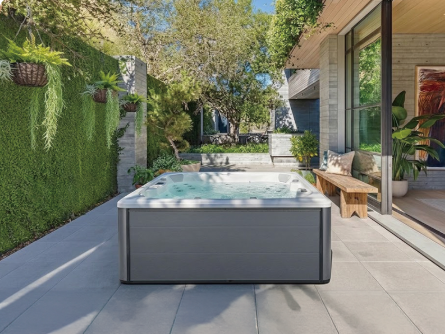
8. Introducing the Bellagio Vinterköld Vastera
The Bellagio Vinterköld Vastera is Bellagio''''''''''''''''''''''''''''''''s precision-engineered cold plunge tub — designed from the ground up for year-round outdoor use and serious cold therapy practice. Named after the Swedish word for "winter cold," the Vinterköld line represents Bellagio''''''''''''''''''''''''''''''''s commitment to bringing the same engineering philosophy that defines its hot tubs to the cold side of the thermal wellness spectrum.
Bellagio Vinterköld · Vastera Specifications
Vastera — The Premier All-Weather Ice Tub
Energy-efficient cooling. Condensation prevention. Built for every climate.
| Capacity | 1 Person · 1 Seat |
| Water Volume | 300 Liters |
| Dimensions | 1780 × 840 × 950 mm / 70 × 33 × 37 inch |
| Dry Weight | 133 kg |
| Chiller System | Mini Inverter Chiller — cuts cooling time by more than half |
| Cooling Rate | 5.4°F (3°C) per hour |
| Circulation Pump | Gecko Circulation Pump |
| Control System | Joyonway P16B162 & PB565 |
| Sanitation | Ozonator + HydroPur Filter (50 sq ft) |
| Frame & Cabinet | AluGuard Frame + AluCombo Cabinet — all-weather rated |
Four Engineering Advantages
| ① User-Friendly Design
Intelle-Control and HydroPur Filter are positioned within arm''''''''''''''''''''''''''''''''s reach for in-session adjustments. Aqua-Shield Lid optimizes space with an interior-grade aesthetic. |
② All-Weather Outdoor Build
AluGuard Frame and AluCombo Cabinet withstand extreme weather. Heat-Vent Pro+ System enhances chiller efficiency with optimized air circulation. |
| ③ Energy Efficiency
Mini Inverter Chiller cuts cooling time by more than half vs. standard systems. Insulation Sleeves prevent hose "sweating" and lock in cold temperature between sessions. |
④ Pro Top Cover
High-density cover maintains water temperature between sessions with climate-specific insulation packages — the cold plunge equivalent of the Thermo-Retain system. |
Discover the full Vinterköld range and find a Bellagio dealer near you to see the Vastera firsthand. Ask about the Masrren Hot Tub + Cold Plunge Combo — the complete contrast therapy setup in one package.
Explore Vinterköld → Find a Dealer →Frequently Asked Questions
The most common questions about cold plunge therapy — answered directly.
The Bellagio Vinterköld Vastera gives you precision temperature control, all-weather durability, and the engineering quality that Bellagio has built since 1996. Find a dealer near you and take the plunge.
Shop Vinterköld → Find a Dealer →